Young animals require special attention during the natural transition from maternal nutrition to independent feed intake and digestion. At the same time, their immune system is still developing, making them particularly vulnerable to health challenges.
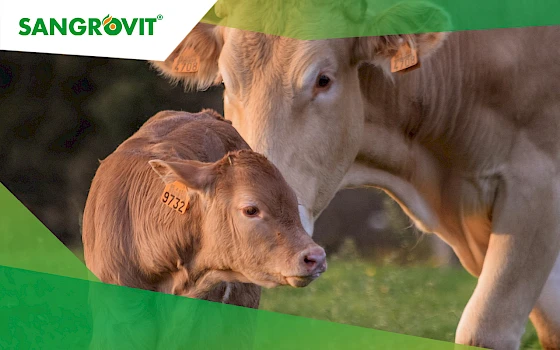
In calves, this period is especially critical because they rely on colostrum intake to acquire passive immunity from the dam and are highly susceptible to enteric diseases, such as diarrhea caused by Cryptosporidium parvum. Sangrovit® based on Macleaya cordata, contains isoquinoline alkaloids that support gut health and function, helping calves overcome these early-life challenges by promoting intestinal resilience and enabling efficient nutrient absorption from the very beginning of life.
It is well established that a healthy calf is the foundation for high performance and profitability in both dairy and beef production systems. During the first weeks of life, calves undergo substantial physiological changes while simultaneously adapting to a new environment.
Unlike many other species, calves receive virtually no immune protection through the placenta during gestation. Consequently, they are born with limited immunity and depend entirely on the timely ingestion of high-quality colostrum to obtain passive immune protection. Effective management practices are therefore essential to avoid exacerbating this vulnerable period through poor housing conditions, disease challenges, nutritional disorders, or unnecessary stress.
A healthy intestinal tract is crucial not only for nutrient absorption but also for the absorption of immunoglobulins from colostrum. Therefore, maintaining gut integrity during the neonatal period plays a central role in calf health.
Calving can be viewed as the beginning of independence. From an immunological perspective, the newborn calf must gradually develop its own immune competence while the maternal antibodies obtained from colostrum decline over time. During the period when passive immunity decreases and the calf's active immunity has not yet fully matured, an "immunological gap" occurs. This temporary reduction in overall immune protection creates an opportunity for pathogens to proliferate, often resulting in intestinal inflammation or disease (Figure 1).

Figure 1: Schematic view of calves‘ immunity status during transition phase.
Supplementing milk or milk replacer with natural isoquinoline alkaloids has proven to be an effective strategy for supporting calves during this challenging period.
In a study published by Mendonça et al. (2021), calves received colostrum immediately after birth and were subsequently fed milk replacer from day 1 to day 21 of life. Twenty-six calves were randomly assigned to two groups. One group (13 calves) received 10 g/head/day of Sangrovit® mixed into the milk replacer, while the control group (13 calves) received no feed additive.
To create a disease challenge, all calves were experimentally infected with Cryptosporidium parvum oocysts on day 3 of life. The researchers evaluated diarrhea incidence and duration, mortality, milk replacer intake, and body weight gain.
The results demonstrated clear benefits of Sangrovit® supplementation:
The benefits of isoquinoline alkaloids have also been confirmed under commercial farming conditions.
In one farm study, the compatibility of Sangrovit® with other gut-health-promoting additives was evaluated. A total of 96 calves received a product containing prebiotics, probiotics, organic acids, and antioxidants. Half of the calves were additionally supplemented with Sangrovit® from day 14 to day 35 of life, while the study continued until day 70.
Calves receiving Sangrovit® achieved:
The four studies summarized above, including both controlled challenge models and commercial farm trials, consistently demonstrate that the first weeks of life remain a critical and stressful period for calves (Figure 2). The frequent occurrence of diarrhea observed across different production environments confirms the vulnerability of calves during this stage.
Preventive management should always serve as the first line of defense. Key practices include:

Figure 2: Schematic view of calves‘ challenged period.

Verena Determann holds a Bachelor of Science in Agricultural Economics from the University of Applied Sciences in Bingen and subsequently deepened her expertise through a Master’s degree in Livestock Sciences at Justus Liebig University Giessen. Nowadays, Verena serves as the Product Manager for Sangrovit® at Phytobiotics.

Contact our experts or send us a message. We will contact you as soon as possible.