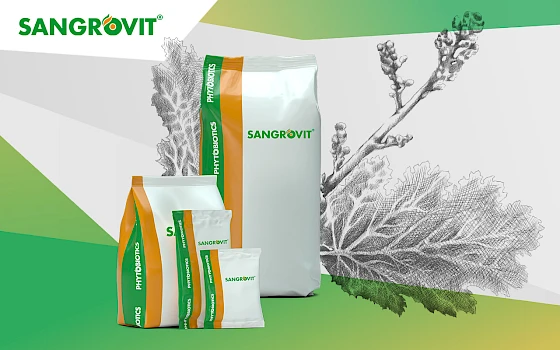
For many producers, the first response to rising raw material costs is reformulation. Lower-cost ingredients, alternative protein sources, or reductions in nutrient density are often necessary to maintain feed affordability. However, these changes can also introduce new challenges, such as reduced palatability, lower feed intake, digestive stress, and ultimately compromised animal performance. Sangrovit® was developed to help animals cope with exactly these situations by supporting appetite, digestive function, intestinal health, and resilience under nutritional challenges.
Soybean meal is one of the most important protein sources in animal nutrition. When prices increase, nutritionists are often forced to reduce inclusion levels or introduce alternative protein sources such as rapeseed meal, sunflower meal, DDGS, or locally available proteins.
The challenge is not simply replacing soybean meal. The challenge is maintaining protein efficiency.
Sangrovit® can be positioned as a protein-value maximizer, helping animals utilize nutrients more efficiently while supporting appetite and digestive performance. Research and commercial experience have demonstrated Sangrovit's positive influence on feed intake, digestion, and animal performance across multiple species. So, when protein becomes expensive, every gram must deliver maximum value. Sangrovit® helps animals get more from the protein already present in the diet. Similarly, when cereal costs increase, energy becomes more expensive and feed conversion becomes even more economically important. Small changes in FCR can significantly impact profitability because every kilogram of feed consumed carries a higher cost.
In these situations, maintaining consistent feed intake and digestive efficiency becomes critical. Animals that reduce feed intake or suffer from gut-related performance losses are far more costly when feed ingredients are expensive. Sangrovit® supports appetite and digestive function, helping producers maintain performance consistency under challenging feeding conditions. Scientific and field observations have repeatedly shown benefits on feed intake and resilience during periods of stress.
High commodity prices inevitably lead to diet reformulation. While reformulation can lower feed costs, it also increases the risk of:
Contact our experts or send us a message. We will contact you as soon as possible.