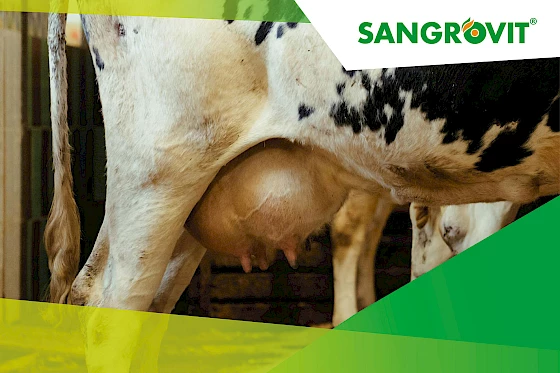
Mastitis and fertility problems are among the most common causes for preliminary culling of cows from dairy herds, accounting for more than 30% of the total losses. Even cases that do not lead to culling the animal from the herd have considerable economic repercussions due to reduced milk yield and milk quality and longer calving intervals, not to mention medication cost and the time and efforts necessary to treat affected animals and prevent the spread of infections to the rest of the herd.
Fertility problems are often caused by chronic endometritis (inflammation of the inner uterine epithelium) and impaired ovarian function. Even though the general state of affected cows is apparently healthy, the inflamed uterus affects the fertilization of the oocyte, or, if conception is successful, it can lead to abortions due to an unfavorable uterine environment. Furthermore, it has been reported that inflammation of the uterus can negatively impact ovarian function. Dystocia (prolonged, difficult birth), retained placenta and clinical metritis (uterine inflammation) are common risk factors that can lead to the development of chronic subclinical endometritis. Though hygienic conditions during parturition and proper assistance of the dam during, and immediately after calving are critical for the prevention of metritis, cow management throughout the dry and transition periods is also critical. Excessive body condition at calving, a profound and prolonged negative energy balance that could lead to ketosis, and hypocalcemia are risk factors for dystocia, retention of fetal membranes and clinical metritis which could eventually lead to chronic subclinical endometritis.
Best management practices during the transition period are essential for a successful lactation. These not only reduce the risk
of subclinical or clinical mastitis but also other prevalent conditions affecting post-partum dairy cows. Mastitis, defined as the inflammation of the mammary gland, is usually caused by bacteria of which E. coli, S. aureus, S. uberis and CNS are among the most prevalent microorganisms isolated. These bacteria can be found in the normal microbial flora of the cow (contagious pathogens) or in the environment (environmental pathogens). A healthy cow’s immune system prevents colonization and infection by these pathogens; nevertheless, a proper milking routine and a clean and dry environment are required to minimize the risk of intramammary infections. However, a wide array of endogenous and exogenous stressors can lower the cow’s defenses and lead to mastitis. High-producing dairy cows are especially susceptible to energy deficits due to low feed intake in early lactation and high milk yields. Periparturient stress, low-grade systemic inflammation, social and heat stress, poor cow-comfort, hygiene, and feed quality are just a few of the factors that can initiate a chain of events which ultimately leads to mastitis.
Against this background, a field trial conducted under Italian summer conditions provides valuable insights supporting the role of targeted nutritional interventions. The study, carried out under the scientific supervision of the University of Milan in 2023, evaluated the effect of Sangrovit® Feed in dairy cows over a period of 91 days. Two treatment groups (n = 58 cows per group) were compared: a control group without supplementation and a group receiving Sangrovit® Feed at 12 g per animal per day included into the TMR.

| Item | Control | TRT | P-value |
|---|---|---|---|
| Pregnant cows % (n) | 37.93 (22) | 72.41 (42) | < 0.05 |
| Average services per head, n | 2.34 | 1.93 | |
| DIM to conception, d | 109 | 108.9 | 0.998 |
| Lameness, % | 24.14 | 10.34 | 0.029 |
| Severe lameness, %* | 6.90 | 0.00 | 0.059 |
| Mastitis, % | 10.34 | 3.45 | 0.105 |
| Abortion, % | 3.45 | 0.00 | 0.247 |
| Bloat, % | 6.90 | 0.00 | 0.059 |
| Total health events, % | 50 | 13.33 | < 0.05 |
Dry and transition cow management should therefore not be taken lightly. It pays off to optimize cow management aimed at optimizing cow comfort and the environment, minimizing stress and inflammation and to provide extra care to periparturient and fresh cows to ensure a successful lactation. High feed quality and an optimum feed formulation are just as important during the dry period as during lactation. In conclusion, all management preventive strategies that unburden the immune system during the transition period are valuable tools for the health, productivity and longevity of dairy cows.

After practicing as a dairy veterinarian, Santiago Bas went to graduate school where he specialized in ruminant production medicine. Santiago’s goal is to promote sustainable ruminant production by improving animal welfare and performance through the use of innovative feed additives to meet consumer demands.

Contact our experts or send us a message. We will contact you as soon as possible.