Mineral nutrition is a fundamental component of successful ruminant production because it directly influences milk yield, reproductive efficiency, growth, immunity, and overall animal health. Inadequate supply of essential minerals and prolonged deficiencies result in reduced milk yield, impaired fertility, metabolic disorders, and weakened immune responses. Therefore, providing minerals in forms that are efficiently absorbed and utilized is essential for maintaining optimum productivity (NRC, 2001; Grace and Knowles, 2012).
Chelated minerals are minerals bound to organic ligands such as amino acids or peptides through coordinating covalent bonds. In this way minerals are protected from antagonistic interactions within the digestive tract and their bioavailability is improved compared with conventional inorganic mineral sources. Improved mineral utilization has been associated with increased tissue mineral concentrations, enhanced metabolic functions, greater milk production, improved milk composition, stronger immune responses, and superior reproductive performance (Nocek et al., 2006; Hackbart et al., 2010). Owing to these advantages, chelated minerals have become increasingly important in modern livestock nutrition (Ammerman et al., 1995; Paik, 2001).
Among the various chelated minerals available, calcium bisglycinate is of particular interest because of its superior bioavailability. Unlike many inorganic calcium sources, calcium bisglycinate is less susceptible to interference from dietary antagonists and therefore provides a more reliable source of absorbable calcium. This characteristic is especially important during periods of increased calcium demand, such as late gestation and early lactation.
Calcium plays a fundamental role in numerous physiological processes, including muscle contraction, nerve impulse transmission, enzyme activation, blood clotting, skeletal development, and milk synthesis. The body tightly regulates systemic levels of calcium across the bones, kidneys, and small intestines. When blood calcium drops (hypocalcemia), parathyroid hormone (PTH) stimulates bone breakdown, reduces renal excretion, and activates calcitriol (vitamin D active form) to increase gut absorption. When blood calcium rises too high (hypercalcemia), the thyroid releases calcitonin, which halts bone breakdown and promotes calcium excretion through urine. Failure of this homeostatic loop causes distinct clinical issues.
Because the body's calcium reserves must be tightly regulated, efficient intestinal calcium supply and absorption is crucial, particularly during periods of increased physiological demand such as rapid growth, bone development, gestation, lactation, or environmental and metabolic stress.
Vitamin D plays a central role in this process by regulating calcium metabolism, particularly intestinal calcium transport, and ensuring that sufficient calcium is available to meet increased physiological demands (Horst et al., 1994; Nelson, 2023). Intestinal calcium absorption occurs through two pathways: active transcellular transport and passive paracellular diffusion . Vitamin D promotes calcium homeostasis through its active metabolite, 1,25-dihydroxyvitamin D₃ (calcitriol) , which regulates calcium active absorption, mobilization, and utilization in the body (Christakos et al., 2011; Horst et al., 1994).
The importance of active calcium transport becomes especially evident during situations in which calcium requirements exceed the amount that can be supplied through passive diffusion alone. This is very important during physiological challenges such as rapid growth, pregnancy, and lactation, as the body relies heavily on vitamin D-dependent active transport to maximize calcium availability and maintain calcium homeostasis (Christakos et al., 2011; Nelson, 2023).
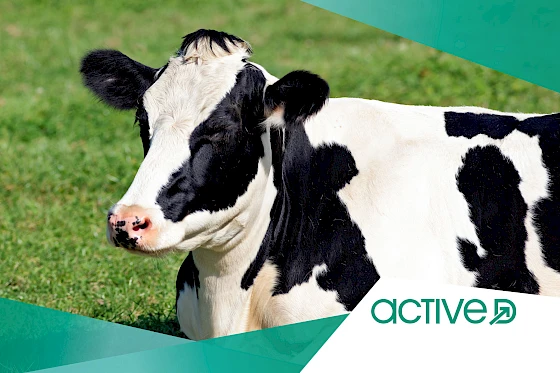
Calving is a critical and challenging phase in the transition period of dairy cows. During this time, the cow undergoes a rapid shift from pregnancy to milk production, resulting in substantial metabolic and hormonal changes and a dramatic increase in nutrient requirements, particularly calcium (Wilkens et al., 2020; Nelson, 2023). The demand for calcium rises sharply because of colostrum and milk synthesis. To meet this requirement, the cow must rapidly mobilize calcium from body reserves while simultaneously increasing intestinal calcium absorption. If these adaptive mechanisms are insufficient, hypocalcemia (Milk fever) can occur, a metabolic disorder characterized by low blood calcium concentrations (Horst et al., 1994; Wilkens et al., 2020). This condition may occur in either clinical or subclinical forms, where both forms bring great overall economic losses because of impaired feed intake, reduced milk production, compromised immune function, and increased susceptibility to other transition diseases.
Adequate supplementation with highly available calcium sources such as calcium bisglycinate can help maintain calcium homeostasis, support rumen activity, improve feed intake, and reduce the likelihood of milk fever and associated health problems (Bolan et al., 2001; NRC, 2001). In these cases, providing also already active form of vitamin D improves calcium absorption and supports a faster recovery, reducing incidence of hypocalcemia and supporting a better start to lactation.
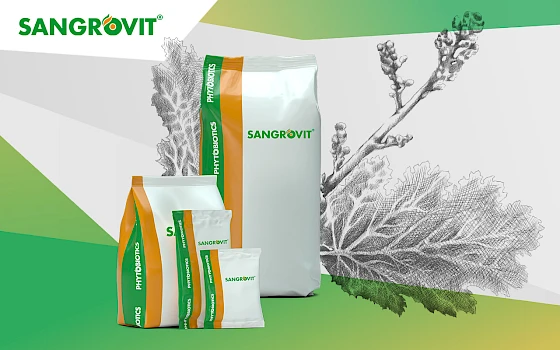
The innovative solution from Phytobiotics - Active D Bolus contains most available vitamin D metabolite from herbal source (calcitriol glycosides) combined with high bioavailable calcium bisglycinate .
The glycosides are easily cleaved by microorganisms and enzymes in the digestive system of the cow, which leads to the relies of active form of vitamin D and improvement of active transport of calcium. Along with improved calcium absorption, the animal also has access to highly bioavailable calcium from calcium bisglycinate.
Administering just one bolus directly after calving triggers quick calcium mobilization in the body and counteracts the decrease of ionized calcium in blood. The bolus dissolves in the rumen within the first 3-4 days, thus ensuring a continuous supply of vitamin D and calcium during this critical phase, which is crucial for subsequent milk production.


Timely control and prevention of hypocalcemia with Active D Bolus in first days post-calving:

Stevan Petrović holds a Doctor of Veterinary Medicine degree from the University of Belgrade. Since 2016, he has gained extensive experience in the animal nutrition industry, combining expertise in veterinary medicine, technical support, and product management. Since February 2026, Stevan serves as Product Manager for Active D at Phytobiotics.
Contact our experts or send us a message. We will contact you as soon as possible.