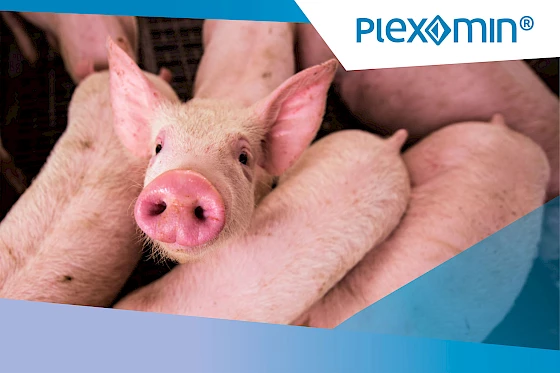
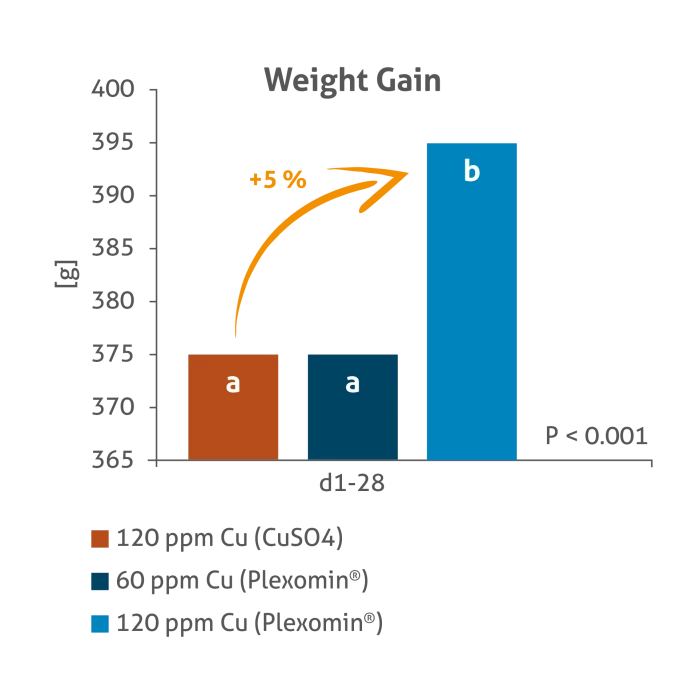
Research from the Netherlands (Schothorst Feed Research) has shown that the same positive effects can be achieved at lower inclusion levels—provided the right mineral form is used. In one trial, weaned piglets supplemented with 120 ppm copper from copper sulfate performed equally well (in terms of daily gain and feed conversion ratio) as piglets receiving only 60 ppm copper from copper glycinate (Plexomin®). Increasing the copper glycinate supplementation to 120 ppm even led to a significant performance boost. These results suggest that appetite stimulation - linked to higher hypothalamic concentrations of neuropeptide Y (NPY) and improved gut health - can be attributed to the superior bioavailability of copper glycinate compared to copper sulfate.
The pharmacological effect of high zinc levels in preventing post-weaning diarrheas is well established; however, this practice has already been banned in certain regions (in the EU since 2022) due to environmental concerns. Traditionally, the mode of action of zinc has been simplified to its direct contact with pathogens and their subsequent neutralization - a process that is non-selective and also affects beneficial microbes, leaving piglets more susceptible to intestinal disorders after treatment. In reality, zinc’s mode of action is multidimensional, with much of its effect occurring within the animal itself. Zinc strengthens the intestinal barrier by upregulating tight junction proteins (claudin, occludin, ZO-1), mitigates inflammatory stress in the gut by downregulating pro-inflammatory cytokines (TNF-α, IL-1β, IL-6), and promotes the expression of anti-inflammatory cytokines (e.g., IL-10). Zinc plays in this way an essential role in maintaining intestinal integrity and a healthy immune balance.
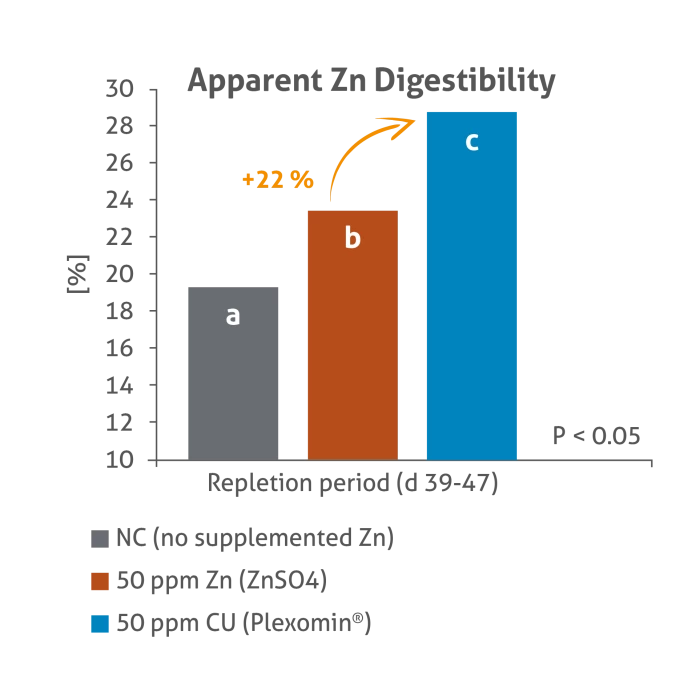
The decisive factor for these effects is the bioavailability of the trace mineral source. A study at Freie Universität Berlin compared inorganic zinc sulfate with zinc glycinate (Plexomin®) and demonstrated around 22% higher relative bioavailability for zinc glycinate. Similar findings were reported by Männer, Simon, and Schlegel (2008), who investigated the bioavailability of different sources of zinc, copper, manganese, and iron.
Ultimately, the bioavailability of trace minerals depends on a few critical factors:

Contact our experts or send us a message. We will contact you as soon as possible.